
How Bubble Shows Support Early Childhood Development?
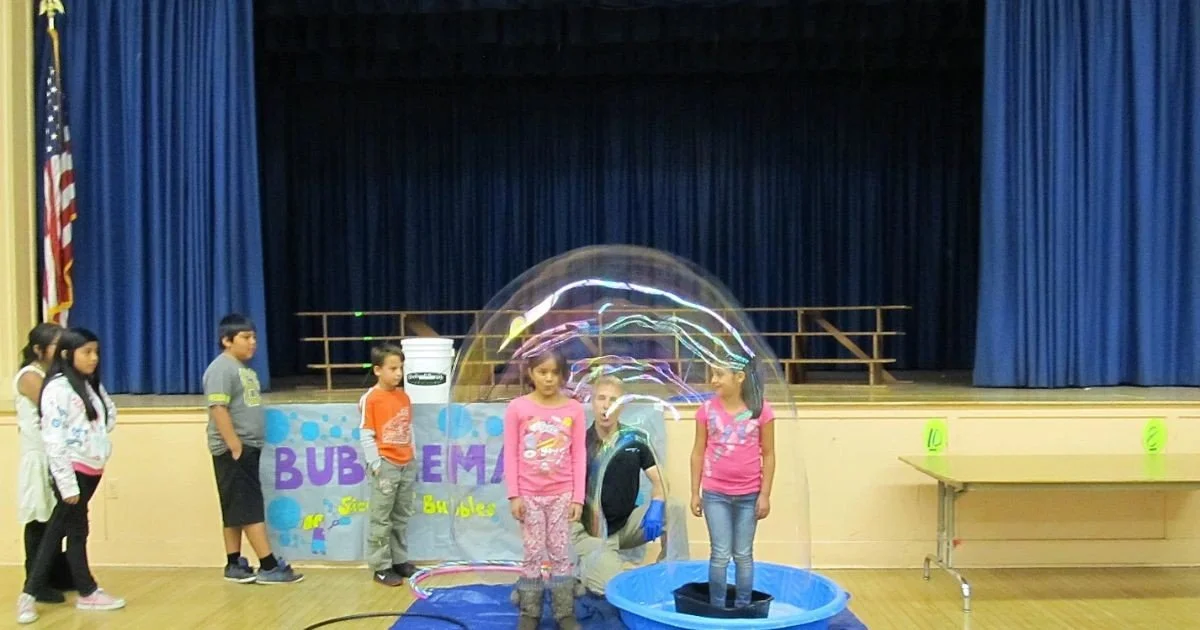
Many people think a bubble show is just "fluff" or a way to keep kids quiet for an hour. That is a total myth. In reality, a bubble performance is a high-octane workout for a child’s developing brain and body, disguised as pure, shimmering joy. It is not just about suds and smiles; it is about building the foundation for a lifetime of learning and physical confidence.
Can Popping Bubbles Actually Build Better Brains?
Believe it or not, when your little one lunges for a floating sphere, they aren't just playing. They are practicing hand-eye coordination and spatial awareness. Finding high-quality kids entertainment Orange County families trust means choosing activities that turn "party time" into a secret classroom for physical and mental growth. These moments of play are actually vital milestones in disguise.
The Physical Magic of the Chase
Gross Motor Skills: Running, jumping, and reaching for bubbles strengthens large muscle groups and improves balance. Each leap toward a floating target helps a child understand how to navigate their own weight and momentum.
Fine Motor Precision: Trying to poke a single bubble with a tiny finger teaches kids how to control small movements. This precision is the same skill they will later use to hold a pencil or tie their shoes.
Visual Tracking: Watching a bubble drift in the wind trains the eyes to follow moving objects smoothly. This is a primary skill required for reading and sports later in life.
Crossing the Midline: Reaching across the body to pop a bubble helps the left and right sides of the brain communicate. This neurological bridge is essential for complex tasks like writing and dressing oneself.
Spatial Awareness: Navigating a room full of other children while chasing a bubble teaches kids how to move without bumping into others. It is their first lesson in personal space and environmental navigation.
Hand-Eye Coordination: Synchronizing the sight of a moving target with the physical act of popping it requires intense brain-to-body signaling.
But there is a deeper layer to this soapy spectacle that most parents miss. Have you ever wondered why a child can stare at a bubble for minutes without blinking?
Why Do Shimmering Spheres Spark Scientific Thinking?
Bubbles are basically science in a suit of armor. They introduce toddlers to gravity, evaporation, and light reflection. When children watch a bubble wobble but hold its shape, they are witnessing surface tension in action. It is a hands-on physics lesson that feels like a fairy tale rather than a boring textbook. They aren't just seeing bubbles; they are seeing the laws of nature at work.
Choosing kids entertainment Orange County professionals ensures your event is both fun and functional. It bridges the gap between a high-energy party and a meaningful educational experience.
Building Focus and Observation
Cause and Effect: Kids learn that a sharp poke makes a "pop," while a gentle touch might let the bubble linger. This teaches them that their actions have direct consequences in the physical world.
Scientific Inquiry: They start asking "why" and "how," which are the building blocks of critical thinking and logic. Why do bubbles stay round? Why do they have rainbows inside them?
Emotional Regulation: The calming, rhythmic nature of floating bubbles helps overstimulated kids find a sense of peace and focus. It acts as a visual "deep breath" that resets a busy mind.
Social Connection: Sharing the "pop" with a friend teaches turn-taking and cooperative play in a group setting. They learn the joy of a shared experience, which builds empathy and social bonds.
Language Development: Describing bubbles—calling them big, small, shiny, or fast—helps toddlers expand their vocabulary. It gives them a reason to use descriptive words in a fun, real-world context.
Curiosity and Wonder: By sparking a sense of awe, these shows encourage a "growth mindset." A child who is curious about a bubble is a child who will be curious about the world.
The best kids party entertainers San Francisco parents hire know that the real "magic" happens when a child's eyes light up with a new discovery. But what happens when the tricks go from simple circles to impossible feats of engineering?
The Secret Sauce of Interactive Performances
Not all bubbles are created equal. A professional show takes those kitchen-sink suds and turns them into architectural wonders. This is where the "wow" factor meets deep learning. It’s one thing to see a bubble; it is another thing entirely to be inside one. It transforms the child from an observer into the center of the experiment.
One major highlight is how we at Bubble Mania and Co.’s main USP is the ability to perform complex bubble tricks that are both educational and visually stunning, which sets them apart from standard party entertainers.
Connecting Joy to Real-World Growth
Choosing kids entertainment Orange County services should feel rewarding. You aren't just booking a distraction; you are providing a multisensory environment. These shows encourage kids to use their senses of sight, touch, and even sound as the bubbles "snap" in the air. It is a full-body experience that stays with them long after the party ends. It creates a memory of "learning" that is associated with happiness.
Think of it as a developmental "multivitamin" that tastes like candy. Your child is learning to observe, react, and engage with their peers. They are building the confidence to move their bodies and the patience to watch a delicate bubble grow.
Frequently Asked Questions
Q1:How do bubble shows help with sensory processing?
Bubble shows provide gentle visual and tactile stimulation. Children learn to track movement and explore different textures, helping them process sensory information in a calm and engaging environment.
Q2:Are bubble shows safe for toddlers and preschoolers?
Yes. Professional bubble shows use non-toxic, child-friendly solutions that are safe for young children. The activities encourage safe movement, interaction, and participation without being overwhelming.
Q3:Can a bubble show be held indoors?
Absolutely. Professional entertainers use protective coverings and controlled setups that allow bubble shows to be performed safely indoors while keeping floors clean and secure.
Q4:Does this count as educational entertainment?
Yes. Bubble shows introduce children to basic science concepts such as light, shapes, movement, and surface tension through interactive demonstrations that make learning fun and memorable.
Q5:What age group benefits the most from these shows?
Children between the ages of 2 and 8 typically benefit the most, as bubble shows support motor skills, sensory development, social interaction, and imaginative play during key learning years.
